
The short answer
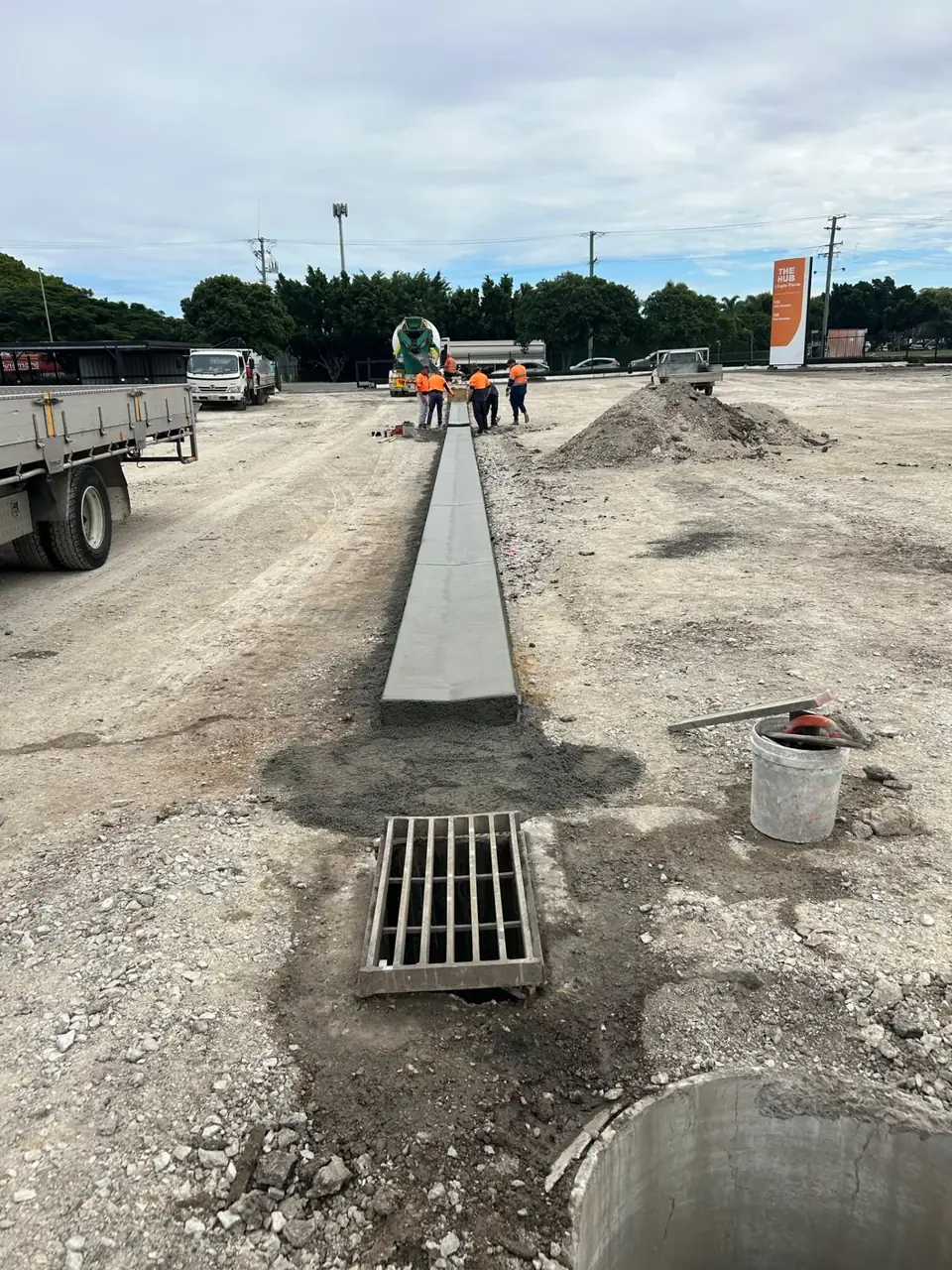
Base preparation and drainage decide how long a driveway or carpark lasts. The base spreads vehicle loads into the ground, and drainage keeps water out of it. Preparation can include excavating unsuitable material, placing and compacting road base, and setting falls so water leaves the surface. An asphalt layer or seal on a weak or wet base will crack and pothole early.
What sits under the surface
A typical driveway or carpark has three parts: the natural ground, or subgrade; one or more compacted layers of road base; and the wearing surface of asphalt or seal. The wearing surface protects the base from water and wear. The base carries the load.
What preparation involves
- Setting out levels and falls.
- Excavating soft, organic or unsuitable material.
- Placing road base in layers and compacting each one.
- Trimming to the finished levels so water runs where it should.
- Priming or tack-coating before the surface goes on, depending on the surface type.
Drainage
Water should leave the surface quickly and never sit against the base. That means falls across and along the surface, and somewhere for the water to go: the street, a pit, a table drain or a stable garden edge. Check where downpipes, garden beds and neighbouring land send water, because that water ends up on the driveway too.
Tell us about these
- Water pooling after rain, or running towards the house or garage.
- Soft spots or ground that moves underfoot.
- Cracks that keep coming back after patching.
- Heavy vehicles: trucks, caravans, machinery, bins.
- Steep sections and tight turning areas.
Why it shows up in the quote
Preparation is often the largest part of the price, and the part that differs most between quotes. A low quote may assume the existing base is fine. Ask each contractor what they plan to remove, how deep the base will be, and how water will leave the surface.
General information only. Every site is different; a site assessment confirms what yours needs.